Author: Fan Jiao
This September 9 marks the 80th anniversary of China’s resistance against Japanese aggression and its victory in World War II. China suffered enormous casualties in WWII, second only to the Soviet Union.
The surrender ceremony that marked the end of WWII in the China Theater was held on September 9, 1945, in Nanjing, one week after the formal end of the war in Asia on September 2. The ceremony took place at 9 a.m. in the Grand Auditorium of the Central Army Officer Academy in Nanjing, China.
In this 15-minute ceremony, General Okamura Yasuji, Commander-in-Chief of the Imperial Japanese Army’s China Expeditionary Forces, signed the instrument of surrender written in both Japanese and Chinese. The unconditional surrender was accepted by General He Yingqin, Commander-in-Chief of the National Revolutionary Army of the Republic of China and representative of the WWII Allies.
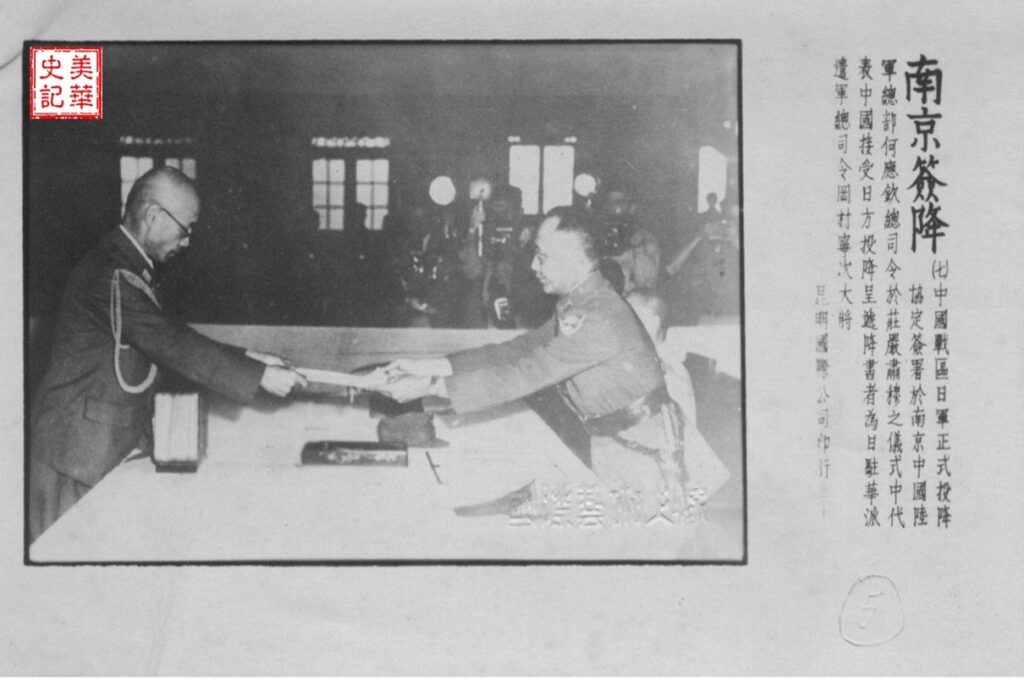
At the end of World War II in August–September 1945, more than 1.5 million Japanese troops surrendered in the China theater, including the following forces:
China Expeditionary Army (中支那派遣軍)
Stationed in central and southern China, with approximately 1 million troops, consisting of about 25 to 30 infantry divisions.
Kwantung Army (関東軍) — stationed in Manchuria (the puppet state of Manchukuo)
Approximately 700,000 troops. Once an elite force, it was severely weakened after being attacked by the Soviet Union in 1945.
Comprised of about 20 to 24 divisions.
Taiwan Army (台湾軍)
Over 100,000 troops, consisting of 1 to 2 divisions.
It is estimated that 10 to 17 million Chinese civilians died during World War II, along with approximately 3 to 3.75 million soldiers who were killed in two to three dozen major battles.
On the main battlefronts, a total of 22 major campaigns broke out over the eight years of the war.
1. Chinese First Major Victory, Battle of Taierzhuang (3/1938-4/1938)
By 1938, after the brutal battles of Shanghai and Nanjing, China’s military had suffered devastating losses.
The air force and navy were nearly wiped out, and the nation’s overall military strength had reached a perilous low point.
It was against this backdrop that the Japanese military turned its sights toward the Chinese interior — targeting a critical airbase in Zhijiang, Hubei Province. Their primary objective: to destroy the Chinese air force installation stationed there.
The Zhijiang base was more than just a local stronghold — it was home to both the Republic of China Air Force (ROCAF) and units from the United States Army Air Forces (USAAF).
It played a crucial role in maintaining Allied air superiority over central China and served as a key hub for U.S. bomber operations.
Strategically located just 270 miles (435 kilometers) from Chongqing, the wartime capital of the Nationalist government, Zhijiang was a prize the Japanese either aimed to seize — or force the Chinese to destroy under pressure.
Commanding China’s defense was General Li Zongren, head of the Fifth War Zone. This engagement would go down in history as China’s first major victory in the War of Resistance — a powerful blow to the myth of Japanese invincibility, and a turning point that electrified the Chinese people with newfound resolve.
The fighting was brutal. Close quarters combat and fierce urban street battles defined the conflict. In the narrow, winding streets, Japanese artillery and heavy weapons proved less effective, allowing Chinese troops to fight on more equal footing.
For the first time, China not only held the front lines — it also secured its supply routes and successfully cut off Japanese logistics, laying the foundation for a rare and vital victory.
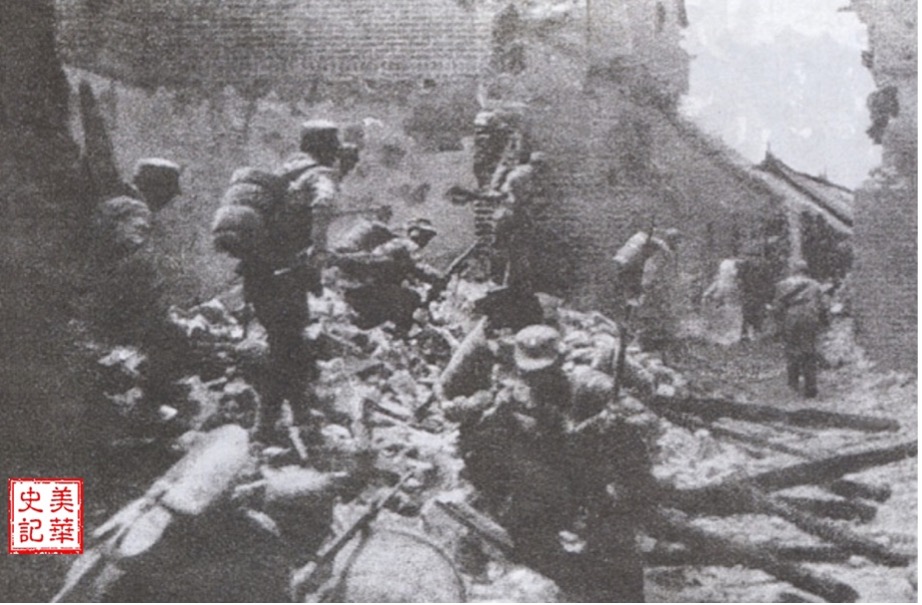
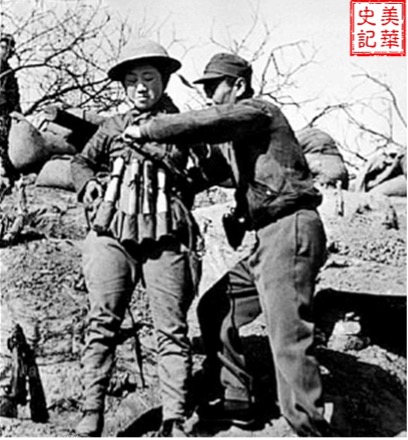
The battle was ferocious beyond imagination.
To maintain discipline and morale, Chinese military leaders resorted to strict measures. Field officers were explicitly forbidden to retreat — often ordered to personally fill the ranks of fallen soldiers and continue fighting at the front.
General Li Zongren, commander of the Fifth War Zone, issued a chilling warning to General Tang Enbo (汤恩波): If he failed to carry out his duty and reinforce the front, he would meet the same fate as Han Fuqu (韩复榘) — executed by order of Chiang Kai-shek.
The message was clear: the stakes were absolute. The pressure unbearable. And yet, the determination to resist was unwavering.
At night, Chinese infantrymen often formed stealth assault teams, advancing through the darkness with nothing but bayonets and sabers.
Before the attack, officers would hand out silver dollars as a reward.
But many soldiers would cast them aside, saying:
“We’re not afraid of death. Just use that coin to carve a headstone when we’re gone — when victory finally comes.”
That one line embodied the spirit of sacrifice and the unyielding hope for victory that defined China’s resistance.
The Battle of Taierzhuang left both sides bloodied — with estimated casualties of 20,000 to 30,000 on each side.
It was a brutal confrontation — and a turning point that proved China’s will to fight was far from broken.[2]
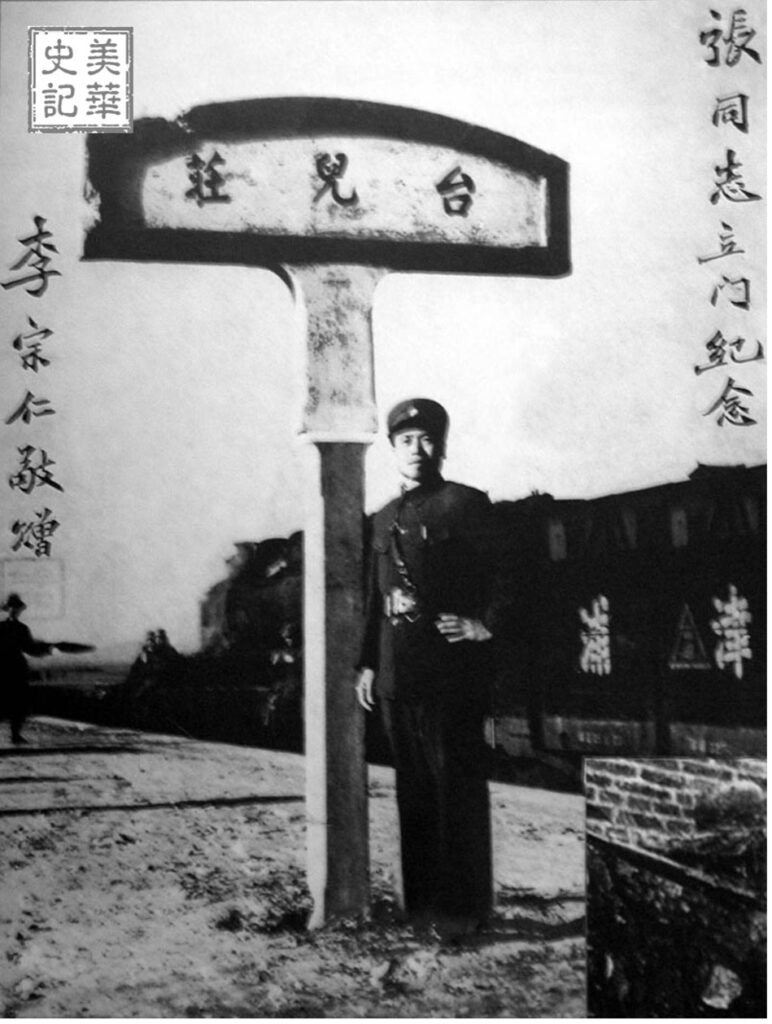
2. The First Battle of Changsha, fought between September 17 and October 6, 1939, marked a pivotal moment in China’s War of Resistance
In the lead-up to the First Battle of Changsha, the global geopolitical landscape had shifted dramatically.
Nazi Germany had just signed the Molotov–Ribbentrop Pact with the Soviet Union, while Japan’s Kwantung Army suffered a severe defeat at the hands of the Red Army in the Battle of Khalkhin Gol.
To recover from setbacks like Taierzhuang and to restore its shaken morale, Japan grew desperate to launch a major offensive in China.
Meanwhile, on September 1, 1939, Germany invaded Poland — plunging Europe into war.
Sensing an opportunity as Western powers turned their focus to the European front, Japan sought to crush Chinese resistance in a swift, decisive blow. It also aimed to pave the way for establishing a collaborationist regime under Wang Jingwei in central China.
Thus, the coming battle would be more than a military operation — it was also a psychological and political campaign, designed to break Chinese will and legitimacy.
In September 1939, to force the Nationalist government into submission and shatter the resistance spirit of China’s armed forces, General Okamura Yasuji (岡村 寧次) commander of the Japanese 11th Army, assembled over 100,000 troops. They launched a massive three-pronged assault on Changsha, attacking from northern Jiangxi, southern Hubei, and northern Hunan. Their goal: to encircle and annihilate the core units of China’s Ninth War Zone.
China’s commander in this critical battle was General Xue Yue (薛岳) head of the Ninth War Zone. Known for his decisiveness and boldness, he was later praised by Claire Lee Chennault, leader of the Flying Tigers, as “the Patton of Asia.”
Xue Yue implemented a strategy of “delaying and drawing the enemy deep into northern Hunan for decisive counterattacks along the flanks.” He mobilized over 240,000 troops, including more than 30 divisions and three rapid-deployment columns, to meet the Japanese assault head-on.
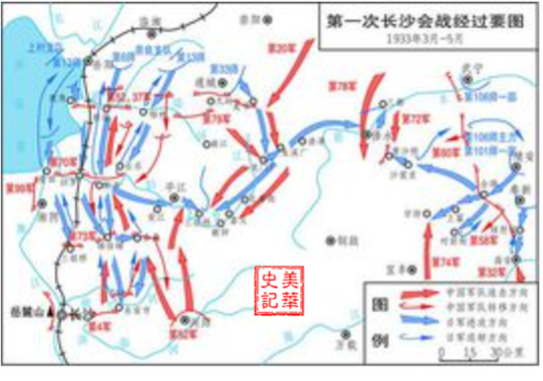
2.1 Combat Operations in Northern Jiangxi(赣北作战)
On September 14, the Japanese 106th Division stationed in northern Jiangxi launched the first diversionary offensive under the command of Nakai Ryotaro. In response to the Japanese advance, Chinese forces, under the frontline command of Luo Zhuoying, mounted a fierce resistance with three army groups and seven corps.
On October 5, General Xue Yue sent another urgent order to commanders Luo Zhuoying, Gao Yinquai, and Wang Lingji, instructing them to annihilate the Japanese 106th Division at all costs. However, just as the Nationalist forces launched their general offensive, the division suddenly mounted a counterattack, successfully breaking through multiple layers of encirclement and retreating to Wuning, where it took up a defensive position.
2.2 Combat in Southern Hubei(鄂南作战)
On September 30, the Japanese 33rd Division captured Zhuxi Factory(朱溪厂), with its main forces subsequently advancing into Changshou Street (长寿街), Longmen Factory (龙门厂), and the Xianzhong (献钟) area. At Sanyan Bridge (三眼桥), west of Xianzhong, they linked up with the vanguard of the Nara Detachment, successfully connecting the northern and southern fronts of the Japanese offensive into a single battle line. However, by that time, the Chinese 15th Army Group, which the Japanese had intended to encircle and destroy, had already withdrawn in an orderly manner.
On October 2, the Japanese 33rd Division began retreating and moved eastward from Zhajin (渣津) toward Xiushui (修水)to support the withdrawal of the 106th Division. Chinese forces—including the 79th Army, 8th Army, 20th Army, and the 30th Army Group—coordinated closely and launched multiple interception and flanking attacks against the retreating Japanese forces. By October 10, the Japanese had retreated to their original defensive positions around Tongshan (通山)and Tongcheng (通城).
2.3 Combat in Northern Hunan(湘北作战)
The First Battle of Changsha began on September 18 on the main battlefield in northern Hunan. The Japanese committed approximately 50,000 troops, including the 6th Division, the Nara Detachment, and the Uemura Detachment, launching an assault on the Chinese forward positions north of the Xintang River (新塘河). On the Chinese side, the defense of northern Hunan was entrusted to the 15th Army Group, commanded by Guan Linzheng.
2.4 Surprise Attack by the Japanese Navy and Landing at Yingtian
Okamura’s move to land at Yingtian (营田)was indeed something that both Xue Yue and Guan Linzheng had not anticipated. After obtaining Xue Yue’s approval, Guan promptly organized the withdrawal of all troops.
2.5 Determined to Defend Changsha
During the First Battle of Changsha, General Xue Yue defied Chiang Kai-shek’s order that “the gain or loss of Changsha shall be determined by military command” and firmly insisted on defending the city to the end. With great emotion, he declared: “If Changsha is not defended, what purpose do soldiers serve!” He immediately convened an emergency war council in Changsha and ultimately devised the famous “Iron Furnace Tactic” — a battle plan to lure the enemy to the outskirts of the city and then encircle and annihilate them.
Based on the geographical features of Hunan, Xue Yue relied on the natural barriers of Dongting Lake (洞庭湖) to the west and the Mufu Mountains (幕阜山) to the east, using the four river systems — Xinqiang River (新墙河), Miluo River (汨罗江), Laodao River (捞刀河), and Liu River (浏河)— as delaying lines against the Japanese advance. At the same time, he implemented a strategic policy of “turning roads into farmland and transporting supplies to the mountains” to reduce the mobility of Japanese mechanized units. The overall strategy was “retreat for decisive battle, strive for the outskirts”: Chinese Nationalist forces adopted a flexible tactic of “fight and retreat,” engaging in guerrilla warfare between the four rivers and the Mufu Mountain area, drawing the Japanese into a pre-arranged encirclement, where the main force inside Changsha would then launch a pincer attack with troops hidden in the surrounding forests and hills.
Xue Yue also ordered the 4th Army and artillery units directly under the War Zone’s command to advance toward Yuelu Mountain (岳麓山), Changsha, and the northeast, to seize launch positions for a counterattack and build a system for offensive operations.
On the Japanese side, the 11th Army commander Okamura Yasuji directed operations from Xianning (咸宁). In the early stages, he received frequent reports of victories: the 106th Division and Saeda Detachment from northern Jiangxi advanced as planned into northern Hunan; the 33rd Division from southern Hubei reached the upper Miluo River; and the 6th Division, along with the Nara and Kamimura Detachments, broke through the Xinqiang and Miluo River defense lines in northern Hunan — seemingly putting the capture of Changsha within reach.
However, the tide of battle suddenly turned: in northern Jiangxi, Japanese forces were fiercely resisted by Chinese troops and could not advance; although the southern Hubei forces joined up with the main force in northern Hunan, the Nationalist troops had already made a planned withdrawal; and on the northern Hunan front, Chinese forces abandoned static defense and instead adopted mobile tactics with repeated ambushes, leaving Okamura confused and uncertain.
Even more critically, he underestimated the total war capabilities of the Chinese military and civilians. Before the battle, under government mobilization, local civilians coordinated with the army to destroy all roads between the Xinqiang and Laodao Rivers, turning farmland into freshly plowed soil, making it nearly impossible for Japanese mechanized units to move and causing severe logistical difficulties. Under these unfavorable conditions, Okamura ultimately issued a retreat order, stating:
“Chinese forces are tenacious and still hidden along both banks of the Miluo and Xiu Rivers (汨水、修河). In order to avoid an unfavorable situation, our forces should swiftly return to original positions to restore combat power and take strict precautions against Chinese pursuit.”
At the front, Chinese General Guan Linzheng immediately detected signs of a Japanese retreat and ordered a pursuit. On October 2, the 15th Army Group recaptured Shangxiang City (上杉市) on October 3, the 25th and 195th Divisions chased the enemy to the vicinity of Fulinpu and Jinjing (福临铺、金井), forcing the Japanese to retreat to the north bank of the Miluo River; on October 4, the 15th Army Group regained control of key areas including Changle Street, Miluo, and Xinshi (长乐街、汨罗、新市).
By October 9, China’s 195th Division had resecured the line from Lujiao to Xinqiang and Yanglin Street (鹿角、新墙、杨林街), and the Japanese gradually withdrew north of the Xinqiang River. By October 14, the battlefront had returned to its pre-battle status, marking the end of the First Battle of Changsha, with China achieving a strategic victory.
After the battle, both sides released their own battle reports: Japan claimed to have killed, wounded, or captured over 48,000 Chinese troops while suffering only 3,600 casualties themselves;China, on the other hand, announced that more than 30,000 Japanese troops were eliminated, with the 9th War Zone sustaining about 40,000 casualties.
Changsha became the first major city since the outbreak of the war to successfully repel a large-scale Japanese offensive. Its defense effectively thwarted Japan’s plans to further expand in southern China and held major strategic significance for the broader war effort.
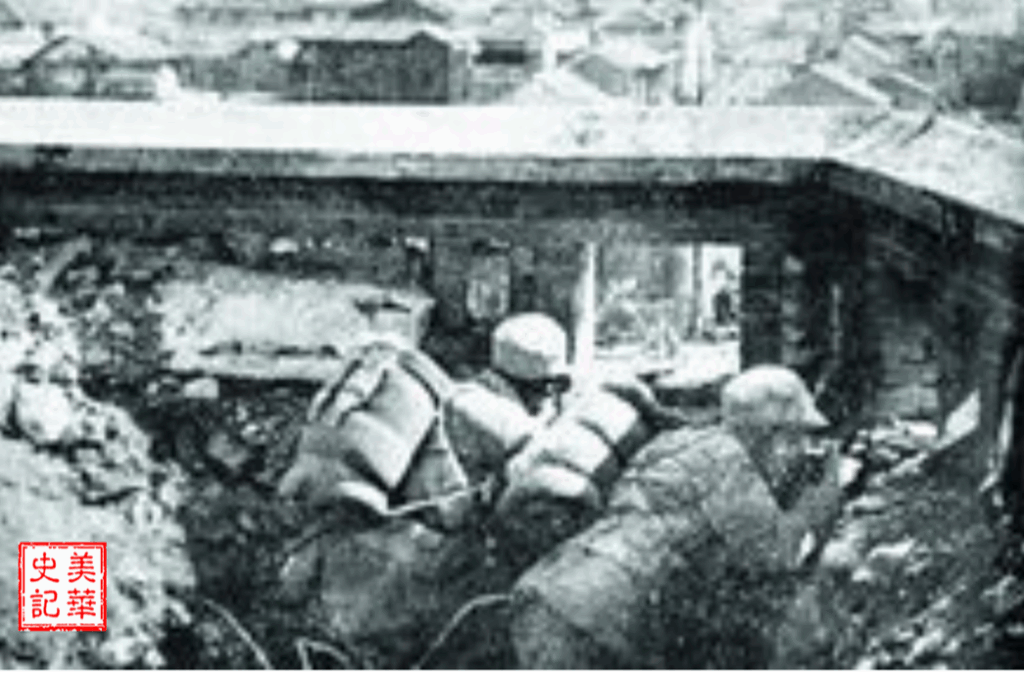
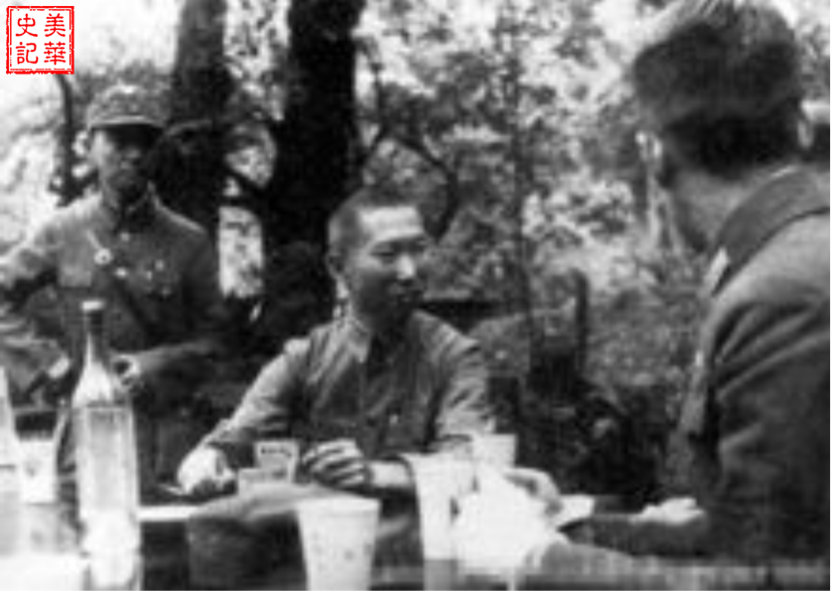
3. Hundred Regiments Offensive (百团大战),August – December 1940
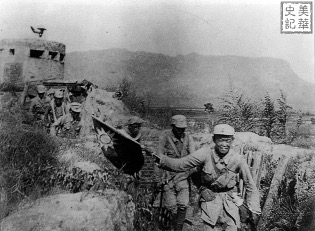
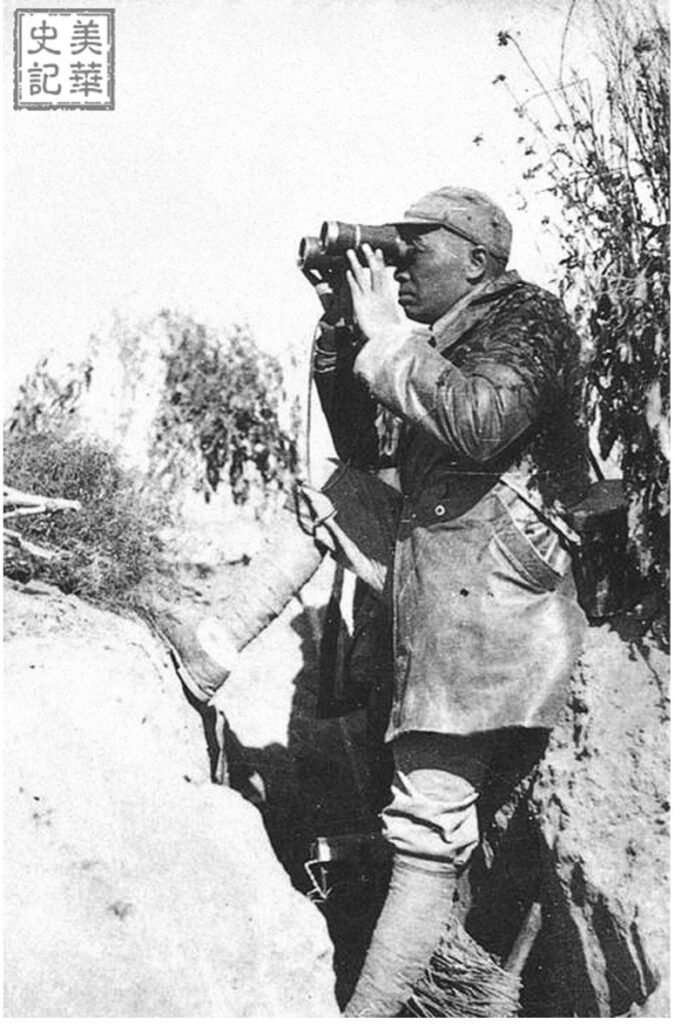
The Hundred Regiments Offensive was the largest and longest strategic assault launched by the Eighth Route Army behind enemy lines in North China during the Second Sino-Japanese War. In early 1940, General Peng Dehuai, Deputy Commander of the Eighth Route Army and a lieutenant general in the National Revolutionary Army, issued an order for a coordinated campaign. Under the leadership of the Chinese Communist Party, major forces of the National Revolutionary Army—including 46 regiments from the 115th Division, 47 from the 129th Division, and 22 from the 120th Division—mobilized to strike Japanese-occupied cities and the railway lines connecting them. According to official Chinese Communist Party records, the offensive began on August 20.
Throughout the campaign, local civilians and militia played a crucial supporting role. They helped dig up rail tracks, cut down telegraph poles, gathered intelligence, and cared for the wounded—demonstrating a powerful unity between soldiers and the people in resisting the Japanese occupation.
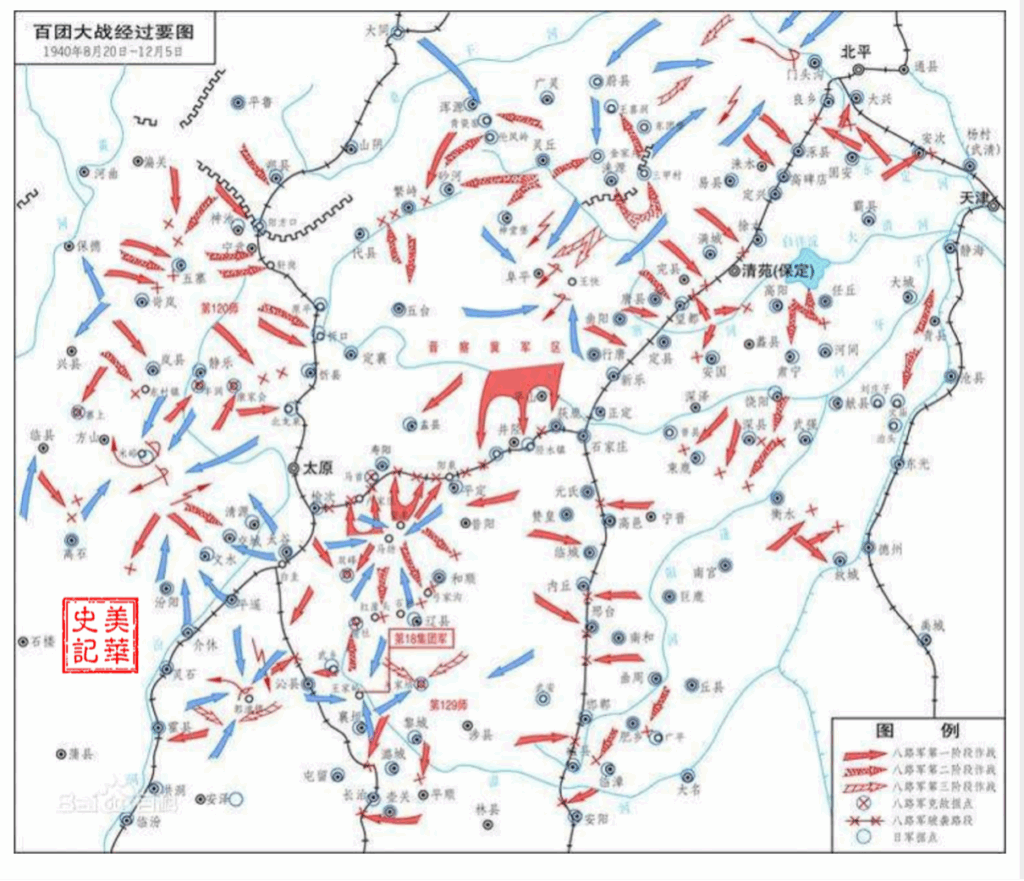
From August 20 to September 10, 1940, the Eighth Route Army launched attacks on railway lines that separated Communist base areas. Key targets included the railway stretching from Dezhou in Shandong to Shijiazhuang in Hebei, from Shijiazhuang to Taiyuan in Shanxi, and from Taiyuan to Datong, also in Shanxi.
Western sources estimate Japanese casualties at around 20,900, with approximately 20,000 puppet troops also killed or wounded.
According to the Eighth Route Army’s official battle summary issued on December 10, 1940, the campaign resulted in 20,645 Japanese troops killed or wounded, and 5,155 puppet soldiers killed or wounded. In addition, 281 Japanese and 18,407 puppet troops were captured, with 47 Japanese and 1,845 puppet troops defecting to the Communist side—a total of 46,380 enemy personnel eliminated or neutralized.
The campaign also destroyed 2,993 enemy strongholds, sabotaged over 900 li (approximately 450 kilometers) of railway and more than 3,000 li (approximately 1,500 kilometers) of highways. More than 260 bridges and railway stations were damaged or destroyed. Large quantities of weapons and military supplies were seized. The Eighth Route Army suffered over 17,000 casualties. As a result of the offensive, the Communist-controlled anti-Japanese base areas in North China expanded significantly growing to encompass 10 out of the 437 counties in the region.
On September 25, Chiang Kai-shek sent a congratulatory telegram to Zhu De and Peng Dehuai:
“Your forces seized the opportunity and struck decisively, inflicting heavy blows upon the enemy. I hereby commend you.”
In the spring and summer of 1940, Japanese militarists had originally planned to launch their “Southward Expansion” strategy, aiming to strike across the Pacific while Germany swept through Europe. However, in order to resolve the China conflict first and clear the way for further southern operations, Japan was forced to suspend its southern strategy. Restoring “security” in North China became its top priority.
4. The China-Burma-India Theater, Operation Ichi-Go, and the CCP-Led Resistance in Occupied Areas
In 1942, the top priority for the Allies in Asia was to unite Asian nations and open the China-Burma-India (CBI) Theater. However, China and Britain had disagreements over the postwar restoration of Burma. Burma held strategic importance for China, and with its fall to Japanese forces in April 1942, China’s last overland international supply route was cut off. The only remaining link was the perilous “Hump” airlift—a 500-mile aerial supply line over the Himalayas.
The China-Burma-India Theater (CBI) was the U.S. military’s designation during World War II for its operations in China, Southeast Asia, and the India-Burma region. 。【5】 Allied strategic planning had a direct impact on China’s war preparations. At the Cairo Conference in November 1943, China agreed to launch a large-scale joint military operation in Burma, contingent on significant Western Allied support. However, this promise was not fulfilled. Just days later, at the Tehran Conference, the Western Allies and the Soviet Union decided to prioritize the European theater.
In January 1944, Chiang Kai-shek warned U.S. President Franklin D. Roosevelt that prioritizing Europe would embolden Japan to intensify its offensive and attempt to completely defeat China. By late March, Chinese leadership concluded that a major Japanese assault was imminent.
To bolster defense, China attempted to mobilize the Y-Force Expeditionary Army, stationed in Yunnan and originally intended for deployment in Burma. This elite force of around 100,000 men, trained and equipped by the United States, was part of the National Revolutionary Army. However, in early April 1944, the U.S. threatened to terminate the Sino-American Lend-Lease Agreement—which supplied China with weapons, materials, and support—unless Y-Force was placed under the command of General Joseph Stilwell and committed to operations in Burma. Eventually, in mid-May, Y-Force joined the Allied campaign in Burma, coinciding with the start of Operation Ichi-Go in China.
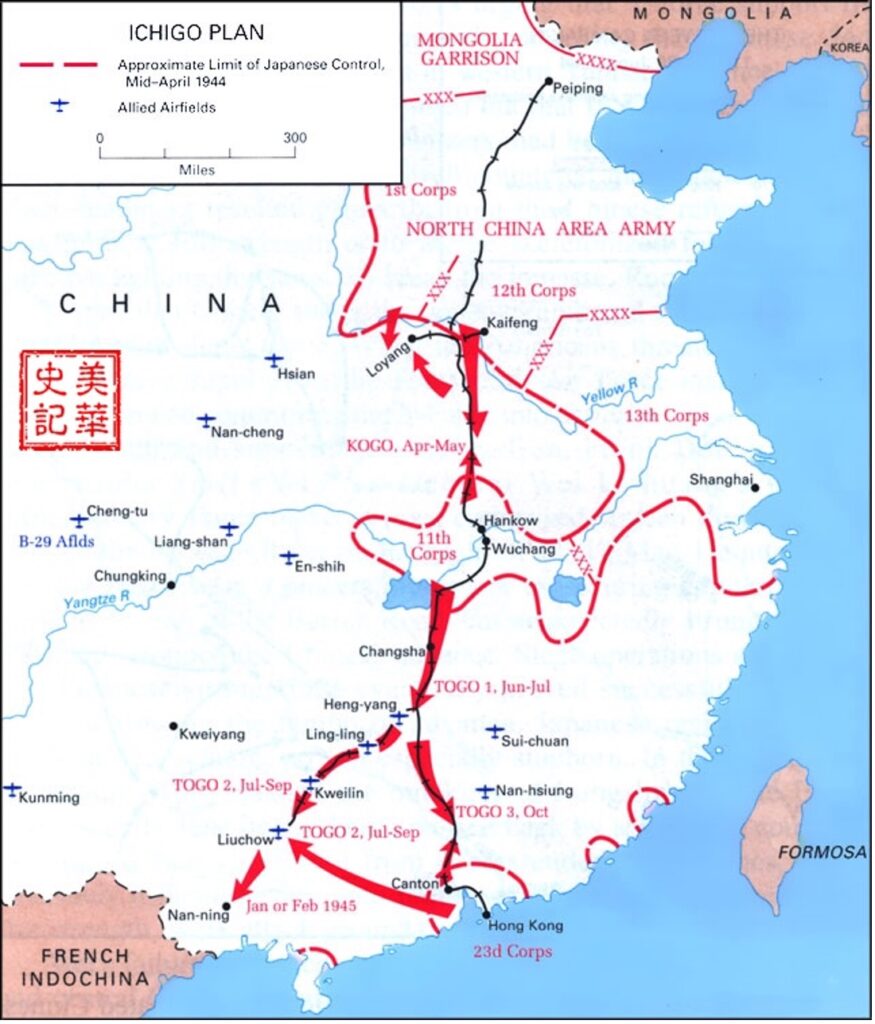
Operation Ichi-Go (April–December 1944) was a massive Japanese military campaign waged by the Imperial Japanese Army against the National Revolutionary Army of the Republic of China. [5] It consisted of three major battles across the provinces of Henan, Hunan, and Guangxi. [6]
The two main objectives of Operation Ichi-Go were:
To open a land corridor from Japanese-occupied northern China to French Indochina.
To seize American airbases in southeastern China, which were crucial for Allied bombing raids against Japan and its maritime supply routes in the CBI Theater.
To carry out this offensive, Japan mobilized an immense force: approximately 500,000 troops, 100,000 horses, 1,500 artillery pieces, 800 tanks, 15,000 military vehicles, and 200 bombers. The campaign was supported by eight months’ worth of fuel and two years’ worth of ammunition stockpiles.
According to historian Hara Takeshi, this was “the largest military operation ever undertaken by the Japanese Army.”
Because Chinese forces were simultaneously engaged on both the domestic front and in the India/Burma theater, defensive operations in later battles such as Changde (常德)and Hengyang (衡阳) suffered due to insufficient manpower, resulting in serious setbacks.
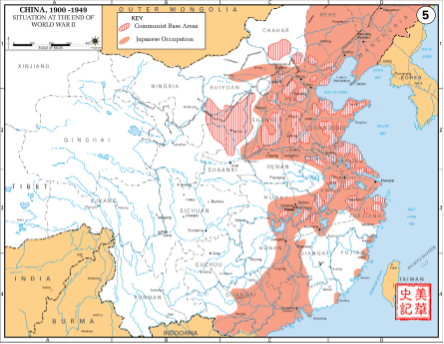
On the other hand, since 1938, the Chinese Communist Party (CCP) had played an increasingly important role in resisting Japanese aggression. In the Japanese-occupied provinces, CCP-led resistance forces and guerrilla units steadily grew in strength and influence.
The anti-Japanese base areas under CCP leadership were established in provinces such as Chahar (察哈尔省) (part of modern-day Inner Mongolia), Suiyuan (绥远), Shanxi (山西), Shandong (山东), Hebei (河北),Henan (河南), Hubei (湖北), Anhui (安徽), Zhejiang (浙江) and Jiangsu (江苏).
These forces adopted mobile guerrilla tactics, launching hit-and-run attacks, sabotaging Japanese supply lines, and ambushing Japanese and puppet troops. This strategy forced the Japanese to disperse their forces across occupied territories, thereby weakening their overall control and combat effectiveness.
The CCP’s success in guerrilla warfare not only boosted its reputation but also won the support of the Chinese population, laying a critical foundation for its eventual victory in the Chinese Civil War after World War II.
5. Unprecedented Unity Among Chinese Americans and the Chinese Exclusion Act
In December 1941, after the United States declared war on Japan, the U.S. and China became allies, jointly participating in the global anti-fascist war. Chinese Americans, who had long been severely discriminated against under the Chinese Exclusion Act, began to be recognized as respected and valued members of American society. If we look closely, we find profound commonalities among different ethnic groups.
Pearl S. Buck and her husband deeply sympathized with the suffering of the Chinese people. They joined the Citizens Committee for the Abolition of the Chinese Exclusion Act, tirelessly advocating for the repeal of the Act. Their dedicated efforts played a key role in ending the 61-year-long exclusion policy; the Chinese Exclusion Act of 1882 was finally repealed in 1943 by the Magnuson Act. [7]
During the eight years following Japan’s invasion of China, Chinese Americans donated approximately 20 million U.S. dollars to support China’s war effort.
On May 9, 1938, sponsored by the Chinese Consolidated Benevolent Association, about 12,000 Chinese Americans from New York City and other East Coast cities held a 3.5-mile-long parade through Chinatown to publicly express their support for China’s resistance against Japan.
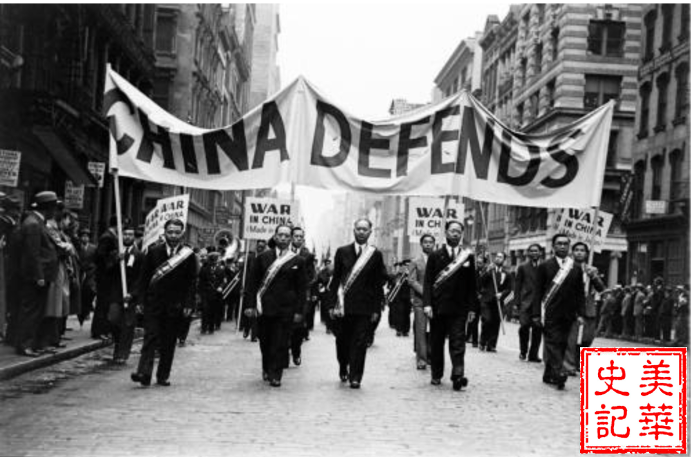
The attack on Pearl Harbor further galvanized Chinese Americans.
In its aftermath, Chinese Americans experienced a newfound sense of heroism and purpose. They felt a dual responsibility: to defend the United States, their home, and to help liberate China, their ancestral land across the Pacific. Indeed, Chinese Americans finally stepped forward with pride and resolve.
It is estimated that during World War II, approximately 15,000 to 20,000 Chinese Americans enlisted in the U.S. military, representing about 20% of the Chinese American population in the continental United States at the time. In contrast, the national enlistment rate was only 8.6%. In New York City, the rate was even higher—a remarkable 40% of the Chinese American population joined the armed forces.
On April 18, 1943, Madame Chiang Kai-shek (the wife of Chinese Nationalist leader Chiang Kai-shek) delivered a historic address before the U.S. House of Representatives. In her speech, she praised America’s efforts in the Pacific Theater and reaffirmed the deep bond between China and the United States:
“We Chinese, like you, yearn for a better world—not merely for ourselves, but for all humanity. We must make it a reality.”
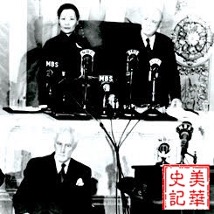
Madame Chiang Kai-shek’s visit to the United States also conveyed deep gratitude for the Lend-Lease Act, through which the U.S. supplied war materials to support China’s resistance against Japan. She was the only female foreign dignitary ever to deliver a speech at a reception before the U.S. House of Representatives. Speaking in elegant, gentle English and presenting herself with grace and dignity, she immediately won the affection of the American public, leaving them with a warm and positive impression of the Chinese people.
Her speech was widely regarded as instrumental in changing negative stereotypes about Chinese Americans, helping them gain greater sympathy and support from the broader U.S. population.
Soong Mei-ling’s visit also strengthened the wartime alliance between the U.S. and China. She played a key role in advocating for the repeal of the Chinese Exclusion Act. In private, Madame Chiang lobbied numerous members of Congress and influential American figures, including First Lady Eleanor Roosevelt, urging them to support repeal.
At a private dinner with several key lawmakers, she stated clearly that repealing the Exclusion Act would not only boost Chinese morale but also demonstrate that the U.S. truly valued its allies.
She argued that maintaining a racially discriminatory law like the Exclusion Act was fundamentally at odds with the values professed by the Allied powers, and it undermined America’s moral standing in the war.
In the end, it was the unprecedented unity and patriotism of Chinese Americans, the advocacy of figures like Pearl S. Buck and Madame Chiang, and the sacrifices of Chinese soldiers fighting on the front lines, that helped bring about the repeal of the 1882 Chinese Exclusion Act.
6. Battle of Changde(11/1943 – 1/1944)
Changde (常德), located in northern Hunan province, is bordered by Dongting Lake (洞庭湖)—one of China’s “Five Great Lakes“—to the east, and the Wuling Mountains (武陵山)to the west. Yet what made Changde most notable during the war was not its scenery, but its strategic importance as a center of vital resources. Known as a “land of fish and rice,” Changde was a major grain-producing region and a critical supply base during the War of Resistance. It also served as a strategic gateway to Guilin, Guiyang, and Chongqing (桂林、贵阳、重庆)—key cities in southwestern China.
In the winter of 1943, the Japanese army launched a massive offensive known as the Battle of Changde. The goal was to open a north-south transport corridor, support Japan’s campaign in Burma, and apply pressure on the Nationalist forces of the Republic of China.
The city’s defense was entrusted to the 57th Division of the 74th Army, commanded by General Yu Chengwan (余程万), with a modest force of only 8,529 troops. In contrast, the Japanese deployed around 60,000 soldiers from the 11th Army, equipped with chemical weapons, flamethrowers, and even biological bombs, aiming to overwhelm Changde with superior firepower and take the city swiftly.
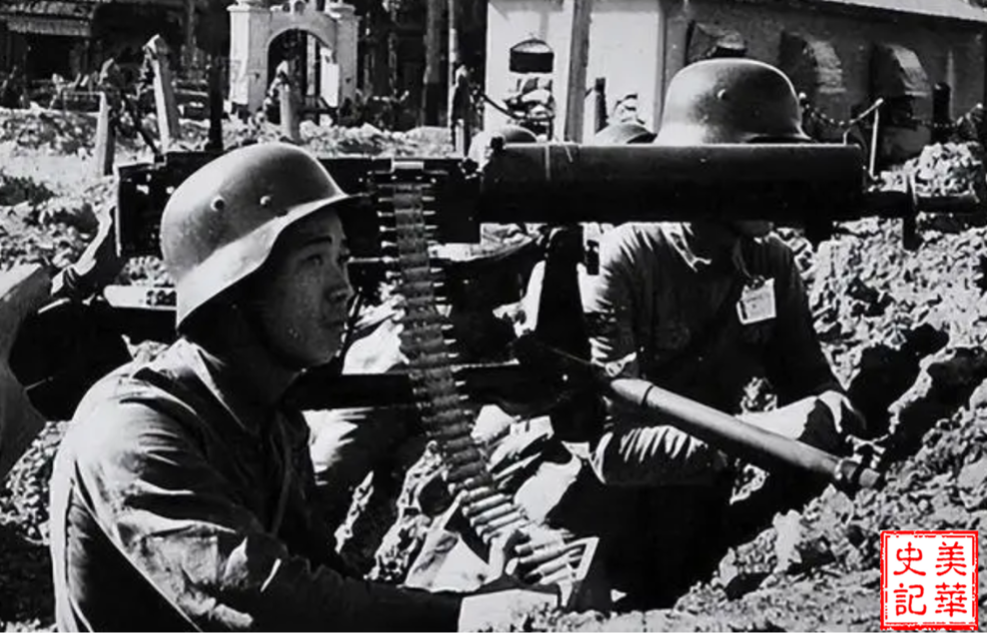
In the early phase of the Battle of Changde, Japanese forces managed to seize parts of the city, forcing large numbers of civilians to evacuate. The 57th Division engaged in fierce urban combat, holding their ground for 16 days despite running out of food and ammunition. They refused to retreat, and in the end, only 83 soldiers survived—their heroic resistance shocked both China and the international community.
Meanwhile, the Chinese military quickly organized reinforcements. Units including the 10th and 18th Armies launched a counteroffensive and initiated an encirclement maneuver. As the battle wore on, Japanese forces suffered heavy casualties and saw their supply lines cut off. On December 13, 1943, they were forced to retreat, and Chinese forces pursued them in a campaign that lasted over 20 days.
The 10th Army, commanded by General Fang Xianjue (方先觉), was the first to recapture Deshan on November 29, then launched an assault on Japanese positions from the south. The fighting was particularly brutal—Lieutenant General Sun Mingjin, commander of the 10th Army’s reserve 10th Division, was killed in action after being struck by five bullets.
On December 11, Chinese reinforcements broke through Japanese defenses, entered the city, and engaged in renewed street fighting. They ultimately cut off the enemy’s supply routes, forcing a full Japanese withdrawal. By January 5, 1944, Japanese forces had been pushed back to their original positions, and the battlefield was once again under Chinese control.
Chinese forces displayed extraordinary bravery in this battle, suffering heavy losses. In addition to General Sun Mingjin, two other division commanders were killed:
Lieutenant General Xu Guozhang, commander of the 150th Division of the 44th Army, was killed in action on Taifushan, northwest of Changde, at the age of 37.
Lieutenant General Peng Shiliang, commander of the 5th Division of the 73rd Army, died in battle along the Taoyuan–Shimen line, at the age of 38.
It is also notable that the Battle of Changde marked the largest deployment of Chinese air force units since the Battle of Wuhan. The air force coordinated closely with ground operations, demonstrating significant combat effectiveness.
According to U.S. and British Allied estimates, Chinese casualties reached approximately 43,000, while Japanese casualties exceeded 40,000. After the battle, Chinese forces presented large quantities of captured Japanese weapons and prisoners to Allied observers, drawing widespread attention from domestic and international media.
This battle not only greatly boosted national morale during a time of hardship but also became a powerful symbol of Chinese wartime heroism. It helped reinforce the strategic importance of the China theater in the eyes of the Allied powers.
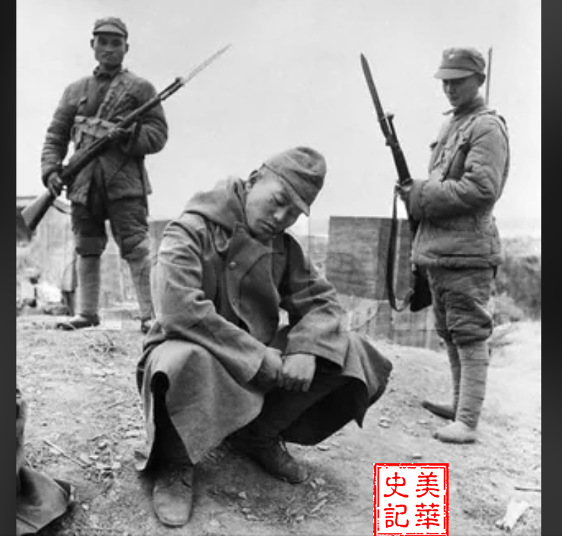
7. China’s “Battle of Stalingrad” — The Defense of Hengyang(June – August 1944)
Within the same decade, China built two major railway lines: the Wuhan-Guangzhou Railway (武广铁路) and the Xiang-Gui Railway (湖南-广西), which intersected at Hengyang. This transportation hub greatly elevated Hengyang’s strategic importance, making it a crucial gateway to Guangxi (广西), Guizhou (贵州), Yunnan (云南) and Sichuan (四川).
Had the Chinese forces failed to hold Hengyang, the Japanese army could have broken through the defense line at this point, advancing into Guilin and then westward into Guizhou, directly threatening Chongqing—the wartime capital and political-military center of China. Such a breakthrough would have placed China’s command center in an extremely perilous situation.
Before the attack on Pearl Harbor, the U.S. government had already been quietly assisting China, most notably through the American Volunteer Group (AVG), known as the “Flying Tigers” led by Claire Chennault. This group of American pilots and technicians went to China to help fight the Japanese.
After the U.S. formally entered the war, General Joseph Stilwell was appointed Chief of Staff for the China Theater and Commander of U.S. forces in the China-Burma-India Theater (CBI). However, as the war progressed, tensions between the U.S. and China increased.
In the Burma campaign, Allied forces, including China’s Fifth and Sixth Armies—considered elite troops by Chiang Kai-shek—suffered severe defeats. Stilwell, frustrated by these losses, became fixated on “revenge” and sought to regain the initiative.
During much of Stilwell’s tenure, his focus was almost exclusively on Burma, viewing it as the top priority, while his attention and cooperation regarding mainland China’s battlefronts were limited. This strained his relationship with Chiang Kai-shek, increasing mutual distrust.
In the months before the Defense of Hengyang, the U.S. pressured Chiang heavily on two main points: to send Yunnan troops into Burma to fight and to allow American observers to visit Yan’an (延安) and contact the Chinese Communist leadership.
On April 3, 1944, President Roosevelt wrote to Chiang making these requests. Shortly after, General Marshall, Chairman of the U.S. Joint Chiefs of Staff, ordered Stilwell to press Chiang, threatening to cut off aerial supplies through the “Hump” airlift from British India to China if Yunnan forces were not deployed to Burma.
Under mounting military and diplomatic pressure, Chiang reluctantly complied. On April 15, 1944—just two days before the Japanese launched Operation Ichi-Go—he ordered the well-equipped and trained Yunnan Expeditionary Force, originally stationed in southwestern China, to enter the Burma theater.
This decision reflected the difficult international pressures and strategic dilemmas faced by the Nationalist government in the late war period and directly weakened the troop deployments defending mainland Chinese battlefronts, impacting the defense of cities like Hengyang.
Following defeats in Henan and the fall of Changsha, the Nationalist government faced its greatest crisis during the war. Both domestic and international opinion expressed disappointment at the Chinese military’s failures, placing enormous pressure on Chiang, who was the highest commander of the National Revolutionary Army.
In mid-July, President Roosevelt proposed that Stilwell assume direct command over all Chinese forces—including Communist troops. This suggestion deeply offended Chiang. At a military meeting on July 21, Chiang lamented:
“Since the failures at the Central Plains and Changsha battles, our country’s status, the honor of our army, especially the honor of our senior officers, has been utterly ruined. Foreigners no longer regard our army as an army, nor us soldiers as soldiers! This spiritual humiliation is worse than the Japanese occupying our land, using force to attack and insult us!”
According to Xu Yongchang’s account, Chiang Kai-shek was “stern and fierce in tone and expression, repeatedly striking the table with great force.”
The 10th Army was ordered to defend Hengyang. Officially formed in 1940, its predecessor was the 190th Division, which fought bravely in the 1938 Battle of Wuhan and was awarded the title “Loyal and Brave Division.”
In the Third Battle of Changsha in late 1941, the 10th Army played a decisive role and was honored with the title “Mount Tai Army.” Mount Tai, the foremost of China’s Five Great Mountains, symbolizes respect, stability, and steadfastness—reflecting the nation’s high regard for the 10th Army’s courageous spirit.
The army commander, Lieutenant General Fang Xianjue, was highly respected in Hunan. During the most critical moments of the Third Battle of Changsha, then-Major General Fang, commander of the 10th Division, pledged to General Xue Yue, commander of the Ninth War Zone, that he would hold his position for one week. He also wrote a “farewell letter” to his wife, which was later published on the front page of the Changsha Daily on January 2, 1942, under the title “Farewell Letter of Major General Fang Vowing to Defend Changsha to Death.” This letter moved countless civilians and embodied the soldier’s spirit of loyalty and mission.
On the evening of May 29, 1944, as the battle clouds gathered over Hengyang, Chiang personally called Fang from Chongqing, ordering him to immediately resume command and rapidly deploy his troops to defend Hengyang for 10 days to two weeks. This marked the beginning of the Defense of Hengyang and signaled Fang’s renewed responsibility to protect Hunan’s gateway.
At the time of deployment, the 10th Army was still undergoing troop replenishment and reorganization. It had suffered heavy losses in the Battle of Changde, including the death of the 10th Division commander, and was severely weakened.
The 190th Division was still being reorganized, with only one regiment at full strength; two others awaited new recruits. The 54th Division had a regiment stationed in Hengyang, which was placed under Fang’s command to assist in the city’s defense. However, after Hengyang Airport fell on the third day of the battle, the regiment’s commander ordered two battalions to withdraw without authorization, leaving only one battalion to continue defending Hengyang.
The 10th Army’s combat strength included one field artillery battalion, one mountain artillery battalion, and one anti-tank company. Though nominally comprising four divisions, the actual fighting strength was equivalent to seven regiments.
According to local historian Pei Xiao, the total defending force in Hengyang numbered 16,275 soldiers (not including a 700-man battalion from the 46th Army, transferred on June 14, 1944, to Hengshan under Fang’s command to tie down Japanese flanks).
Facing a severe imbalance of strength, General Fang personally designed rigorous defensive standards:
- To the north and west, mainly rice paddies and ponds, embankments were dug through to form large, flooded areas, and bunkers were built on all small paths.
- To the south and southwest, hilly terrain required interconnected trenches and shelters, with machine gun positions on both sides of high ground forming overlapping fields of fire to block open areas.
- All slopes facing the enemy were carved into vertical walls with trenches on top for throwing grenades.
- Deep trenches, five meters wide and five meters deep, known by soldiers as “Fang’s Trenches,” were dug on the south and southwest outskirts. Bunkers were constructed along the trenches to block enemies inside.
- Trenches were filled with water or lined with sharpened stakes as deadly obstacles.
- Two to three layers of barbed wire and chevaux-de-frise were installed on the enemy side of the trenches.
- Most outer areas were mined to create dense lethal zones.
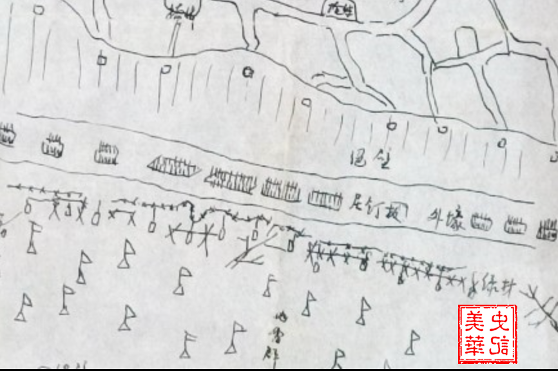
Next, General Fang evacuated all the residents of Hengyang. This not only prevented civilian casualties and allowed the army to focus entirely on combat but also helped to prevent traitors and spies from hiding among the populace. The 10th Army requested free transportation from the railway authorities. Headquarters and affiliated units sent personnel to guard major train stations and assist the elderly and children in boarding trains. Within four days and nights, all 300,000 residents of Hengyang were successfully evacuated.
At that time, Japanese Prime Minister Hideki Tojo ordered the Japanese 11th Army to capture Hengyang as soon as possible. On June 20, 1944, the commander of the 11th Army, Lieutenant General Yokoyama Isamu, issued operational orders for the assault on Hengyang, demanding that the troops swiftly seize the city and annihilate all Chinese reinforcements.
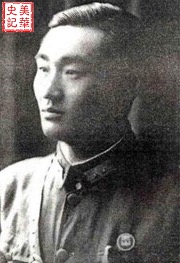
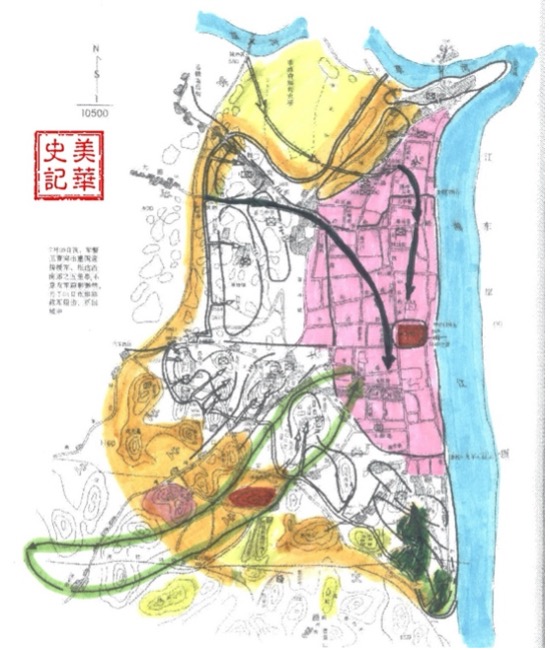
7.1 First All-Out Assault by Japanese Forces(6/28-7/2)
The Japanese 11th Army suffered 16,000 casualties, while China’s 10th Army sustained only 4,000. The Hengyang garrison lost two forward positions—Gaoshan (高山)and Tingmishan (汀泌山) —to the south, and four frontline positions to the north and west.
7.2 Second All-Out Assault by Japanese Forces(7/11-7/16)
On the morning of July 11, the Japanese launched their second major offensive. On the same day, Lieutenant General Mitsuo Tsutsumi officially took command of the newly arrived 68th Division. The entire assault operation was led by Colonel Iwanaga of the 116th Division. The Japanese committed a total of 15 infantry battalions, 12 artillery battalions, and received support from the 5th Air Combat Unit.
At the eastern end of the southern hills, defensive positions including Jiangxiguan (江西馆), Turtle Hill, Hill 141, and Maple Ridge (枫树岭) were held by the 28th Regiment of the Chinese 10th Division. That night, the Jiangxiguan line saw fierce overnight fighting, during which an entire platoon from the 9th Company was wiped out. Battles on other fronts were equally brutal, with both sides repeatedly gaining and losing ground. Casualties mounted rapidly on both the Chinese and Japanese sides.
The assault on Huxingchao (虎形巢) was carried out by the 120th Regiment of the Japanese 116th Division, while the 2nd Battalion of the Chinese 29th Regiment from the 10th Division defended the position. In front of Huxingchao lay an open area facing steep cliffs, creating major difficulties for the 120th Regiment’s assault.
During the first two days, Japanese attacks failed. In response, they moved heavy artillery closer to the front and used feint attacks to lure Chinese troops into exposing six machine gun positions, which were then destroyed by artillery. With dense fire support from close-range heavy weapons, the Japanese eventually broke through layers of obstacles and cliff defenses and launched a full-scale assault.
Regimental commander Wanimoto Takashi (Japanese: わにもと たか) personally led a charge. As they reached halfway up the hillside, Chinese soldiers suddenly leapt from camouflaged bunkers and hurled grenades at the advancing Japanese. Wanimoto Takashi was seriously wounded and soon died of his injuries. In accordance with Japanese military tradition, he was posthumously promoted to the rank of major general.
7.3 Third All-Out Assault by Japanese Forces(8/4-8/8)
By August 1, a total of five Japanese divisions, numbering 110,000 troops, had assembled outside Hengyang. They were equipped with five heavy cannons, fifty mountain guns, and 40,000 artillery shells. Lieutenant General Isamu Yokoyama, wearing a sacred talisman representing the sun goddess Amaterasu from the Ise Grand Shrine, personally flew to Hengyang, preparing to take command of the third general offensive the following day.
At 3:00 a.m. on August 6, the Japanese 58th Division captured Yanwuping (演武坪), a position to the north, and wiped out over 30 remaining Chinese soldiers from Company 5 of the 568th Regiment, 190th Division.
By midday, at North Wugui Hill (北五龟山), the commander of the mortar company from the 8th Regiment, 3rd Division, spotted a Japanese officer waving a saber, clearly giving orders to his troops to charge. Judging from his demeanor, the Chinese officer determined that this was likely a senior commander and fired his final eight mortar shells at the target. As a result, Major General Genkichi Shima, commander of the 57th Brigade, was killed in action.
The Japanese, frustrated by their heavy casualties and lack of significant progress, grew increasingly demoralized. Many senior officers had already fallen in battle. As their official military history records:
“The outlook of the battle did not appear any more promising; thus, the assault was once again halted.”
7.4 Failure to Reinforce Hengyang
Before the Battle of Hengyang began, Chiang Kai-shek personally promised General Fang Xianjue, commander of the 10th Army, that both air and ground reinforcements would be dispatched in support. His strategy was ambitious: Chinese forces from outside would encircle the Japanese, while the Hengyang garrison would strike from within, forming a pincer movement to annihilate the besieging enemy.
On July 13, the 151st Division of the 62nd Army captured Baihepu (白鹤铺) about 20 miles from Hengyang. On July 14, the 194th Division of the 79th Army advanced to Xinqiao (新桥), just 10 miles away. On July 17, after the 151st Division seized Yumushan (雨母山) only 6 miles from the city, they immediately pushed forward toward Oujiazhang (欧家町) and Huangchaling (黄茶岭), both just 2–3 miles from Hengyang.
Meanwhile, the 79th Army formed six assault teams in an attempt to break through Japanese lines and relieve the besieged 10th Army. On July 20, the 151st and 157th Divisions of the 62nd Army reached Oujiazhang (雨母)and Huangchaling (黄茶岭).
That same day, Lieutenant General Isamu Yokoyama, commander of the Japanese 11th Army, ordered a halt to the second phase of the assault on Hengyang, diverting troops to counter the Chinese reinforcements. Hearing gunfire to the southwest, the 10th Army headquarters inside the city believed relief forces were imminent. Through radio communication with the 62nd Army, they agreed to dispatch a small unit to escort the 151st and 157th Divisions into the city.
That night, the 10th Army Guard Battalion broke through Japanese lines, attempting to rendezvous with the 62nd Army at Wuliting, in Hengyang’s southwestern outskirts. No one was there (see the note embedded in Figure 19).
On July 21, the Japanese launched a fierce counterattack against the 62nd Army, inflicting heavy casualties. The commander of the 471st Regiment of the 157th Division was killed, and the 62nd Army was forced to retreat to Yumushan (雨母山). The more distant 79th Army also came under Japanese assault and was forced to halt its advance.
7.5 In the Final Days of Defending Hengyang
The field hospitals and improvised aid stations were overflowing with wounded soldiers. As all the wound medicine were used up, nurses could only use saltwater to clean wounds. When gauze and bandages ran out, they resorted to boiling cotton quilts, tearing sheets and blankets to make dressing materials. Over time, moderately wounded soldiers stopped seeking treatment, and some critically injured men chose suicide or insisted on continuing the fight to take as many enemies with them as possible.
Zhou Hongchuan, a surviving military doctor from the Battle of Hengyang, recalled a scene he would never forget:
His colleague, Captain Jia Shengsan (贾省三), was shot in the abdomen, with his intestines protruding from the wound. While being transported to the field hospital, Captain Jia asked to stop by the Xiang River for one last drink of water. Zhou witnessed him deliberately throw himself into the river, ending his own life.
That afternoon, all division commanders of the 10th Army gathered at headquarters. After 45 days of relentless combat, they unanimously expressed despair. The enemy outnumbered them by more than 100 to 1, and the fall of Hengyang seemed inevitable.
General Fang Xianjue then ordered Chief of Staff Sun Mingyu to draft a telegram to Chiang Kai-shek, later known as the famous “Last Telegram”:
“The enemy broke through the North Gate this morning. Street fighting has begun. Our forces are nearly wiped out; we have no troops left to stop them. We swear to fulfill our duty as soldiers and sacrifice our lives for the nation. We shall not fail the trust placed in us. This is our farewell telegram. Until we meet again in the next life.”
The telegram was signed by General Fang Xianjue, Chief of Staff Sun Mingyu, and four division commanders, and was sent to Chongqing via two routes:
By relay through Zhijiang Airfield
Via radio transmission south of the Yangtze River
General Fang, Sun Mingyu, and Zhou Qingxiang deliberated late into the night. Seeing thousands of wounded men awaiting death due to lack of medicine and the rapid spread of cholera, they realized the time had come to arrange a ceasefire.
After negotiations, and with Japanese agreement to preserve the structure and honor of the Chinese army and allow medical care for the wounded, the garrison ended its isolated resistance.
When news of Hengyang’s fall was confirmed in Chongqing, Chiang Kai-shek wrote in his diary:
“The grief cuts to the bone — I have never felt such sorrow in my life.”
He immediately ordered a nationwide three-minute silence on August 20, in tribute to the 10th Army’s sacrifice.
All five senior commanders of the 10th Army were awarded the Order of Blue Sky and White Sun, the highest military honor of the Republic of China — a rare distinction:
Two division commanders, Ge Xiancai and Zhou Qingxiang (葛先才与周庆祥), received the medals air-dropped to the front lines during battle as a gesture of encouragement.
The remaining three — General Fang Xianjue, and division commanders Rao Shaowei and Rong Kezhen(军长方先觉与师长饶少伟、戎克桢) — were formally decorated after escaping from Japanese captivity following the war.
Even while the battle raged in July and August 1944, major Chinese newspapers were already praising the defenders of Hengyang, comparing the battle to “China’s Stalingrad.”
After the war, public opinion widely honored General Fang Xianjue and his troops as symbols of the nation’s spirit of resistance. The Ta Kung Pao (大公报)remarked:
“The battle not only exacted a heavy toll on the enemy but also set a shining example for all Chinese soldiers.”
On August 12, 1944, Mao Zedong, in a Jiefang Daily (解放日报) editorial, wrote:
“The Hengyang garrison fought heroically, and the people of Hengyang paid a heavy price.”
On February 17, 1946, six months after Japan’s surrender, Chiang Kai-shek ordered General Ge, former commander of the 10th Division, to return to Hengyang to collect the remains of the fallen and establish a martyrs’ cemetery. With the help of over 60 surviving soldiers, General Ge’s team worked diligently for more than four months, digging up skulls and bones, washing them clean, perfuming them, and placing them neatly in the hills of Zhangjiajie (张家界), the site of the fiercest fighting. A photographer was hired to document the process.
Eight weeks later, a cremation hall was built, and a white marble monument was erected, inscribed with:
“Tomb of the 10th Army Soldiers, Battle of Hengyang.”
Although Hengyang eventually fell, Japanese casualties far exceeded the total strength of the Chinese defenders.
The battle has been described as “the bloodiest and most casualty-heavy battle ever fought on such a small battlefield in military history.” Japanese military historians compared it to the brutal siege of Port Arthur in the Russo-Japanese War, calling it “the Lushun of South China.”
A major Chinese newspaper at the time likened it to the Battle of Stalingrad.
The fact that Hengyang held out for so long far exceeded Chiang Kai-shek’s original expectations.
By late July, it was Hideki Tojo’s turn to weep. The Japanese failure to take Hengyang caused another political shockwave in Tokyo.
After the June 20 defeat in the Battle of the Philippine Sea, Tojo was already facing pressure to resign. He desperately needed a decisive Japanese victory to maintain his position.
To that end, he ordered General Yokoyama to capture Hengyang at all costs. The Japanese reconcentrated their entire force, but after several days of heavy assault, advanced only 2 kilometers. By the end of July, they still hadn’t taken the city. Meanwhile, Japan was suffering defeats in Burma and on Saipan, prompting the Emperor himself to lose faith in the war effort. Under immense pressure from senior advisers, Tojo was forced to resign.
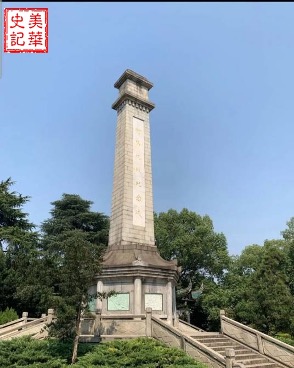
The Battle of Hengyang was a key engagement in Operation Ichi-Go, the largest Japanese military campaign in Central China.
Despite being at a significant disadvantage in troop strength, the Chinese army held out for 47 days, suffering around 30,000 casualties, while the Japanese forces lost over 80,000 men.
8. The Western Yunnan and Northern Burma Campaign (1943–1945) reopened the Burma Road, restoring a vital land route connecting Southwest China to the outside world
This was one of the larger campaigns of the Second Sino-Japanese War, fought in the border region between China’s Yunnan Province and northern Burma, beginning in early December 1943. The objective of the campaign was to open the Ledo Road (also known as the Stilwell Road), thereby reestablishing a land route between China and India. By the end of March 1945, Chinese Expeditionary Forces, British troops, and Merrill’s Marauders converged at the Burmese town of Muse, and the Japanese lost control of their key strongholds in northern Burma.[10]
The Allied forces were composed of troops from China, the United States, and the United Kingdom. The Chinese participating forces included the Chinese troops stationed in India and the Chinese Expeditionary Force. General Wei Lihuang (魏立煌将军) of the Nationalist Army served as the overall commander of the campaign, while U.S. Army General Joseph Stilwell (美国陆军的约瑟夫·史迪威将军) acted as deputy commander. The main Japanese force consisted of frontline units stationed in Burma, commanded successively by generals Shoichi Kawabe, Heitarō Kimura, and Kiyoshi Tanaka. Allied troop strength ranged from 200,000 to 400,000, while Japanese forces numbered between 90,000 and 150,000.
The Western Yunnan and Northern Burma Campaign lasted for a year and a half. The Allies suffered over 80,000 casualties but eliminated more than 30,000 Japanese troops. The campaign significantly weakened Japan’s control in the region, disrupted its communication and supply lines, reopened the Burma Road that linked southwest China to the outside world, and reclaimed territory west of the Lancang (Nujiang) River (澜沧江(怒江)in Yunnan Province.
This campaign marked a successful joint effort by Chinese, British, American, and local Allied forces, paving the way for improved coordination and unified operations in the China–Burma–India Theater.
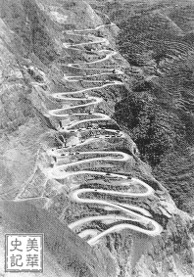
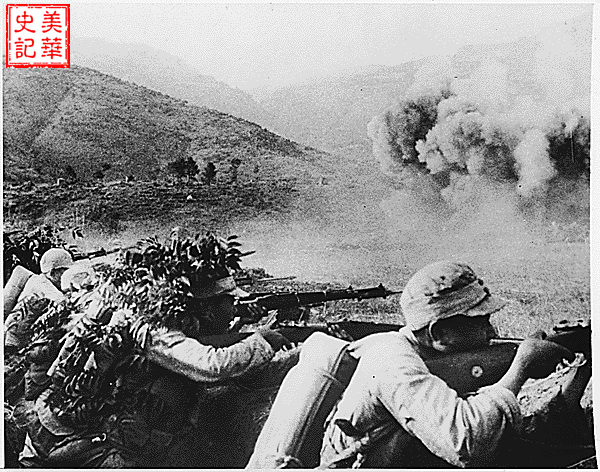
In the late spring and early summer of 1942, following the fall of Burma to the Japanese, the Imperial Japanese Army immediately prepared to invade western Yunnan, aiming to advance along the Burma Road, overrun the entire province, and threaten Chongqing. On May 4, 1942, Japanese forces captured Longling (龙陵) and dispatched 54 aircraft to heavily bomb the thousand-year-old city of Baoshan (保山千年古城). On May 10, they invaded the border town of Tengchong (腾冲) At this point, due to the poor performance of the British-Indian forces, large swaths of territory west of the Nu River (怒江,Salween) fell into Japanese hands.
The Chinese 71st Army of the Expeditionary Force established defensive positions along the eastern bank of the Nu River, repeatedly thwarting Japanese attempts to advance eastward. This stabilized the front lines, resulting in a two-year-long standoff across the river.
At the time, with the Burma Road—China’s only overland international supply route—cut off, enormous quantities of war materials had to be flown into China by the U.S. Air Force via the treacherous “Hump Route (驼峰航线)” over the Himalayas, a method that was both difficult and perilous.
In an effort to regain control of the Burma Road (滇缅公路) six divisions of the Chinese Expeditionary Force stationed in India, together with British and Indian troops, launched a counteroffensive against Japanese forces in northern Burma at the end of October 1943, achieving initial successes. On April 17, 1944, the Chinese Expeditionary Force launched a river-crossing offensive.
The Western Yunnan–Northern Burma Campaign lasted a year and a half. The Allies suffered 31,443 killed and 35,948 wounded, while inflicting over 30,000 casualties on the Japanese. As a result, the international supply line through Southwest China—the Burma Road—was reopened, and all lost territory west of the Nu River in western Yunnan was recaptured.
This campaign was a joint operation between the Chinese Expeditionary Force, U.S. General Joseph Stilwell, and British forces, aimed at reopening the Burma Road. It highlighted China’s international contribution to the Allied war effort and underscored the vital role China played in the global fight against fascism.
9. The Final Battle of the War of Resistance: The Western Hunan Campaign (April – June 1945) “Victory at Jiangkou — No More Japanese Invaders Thereafter. 江口一捷,再无日寇”
In July 1937, under the grip of military extremism, Japan’s cabinet approved a full-scale invasion of China — launching what would become an eight-year war of aggression.
But by the end of 1938, Japan’s ambition was already showing cracks. Its economy strained and its troops overstretched, Tokyo quietly floated the idea of peace talks. General Okamura Yasuji even held secret negotiations with Chiang Kai-shek, offering to withdraw troops from Manchukuo and end hostilities. But Chiang, resolute and unyielding, refused.
Frustrated, Okamura turned once again to force. He believed a decisive blow could still bring China to its knees.
The turning point was the sky. A year before, General Claire Chennault’s joint Sino-American air force — the famed Flying Tigers — had taken up position at Zhijiang Airfield in western Hunan. With powerful B-29 bombers, they pounded Japanese positions in China and even bombed Japan’s home islands. The threat from the air was undeniable — and terrifying.
Okamura’s response was bold: capture Zhijiang, seize control of the Xiang-Qian Highway, and pressure Chongqing into surrender.
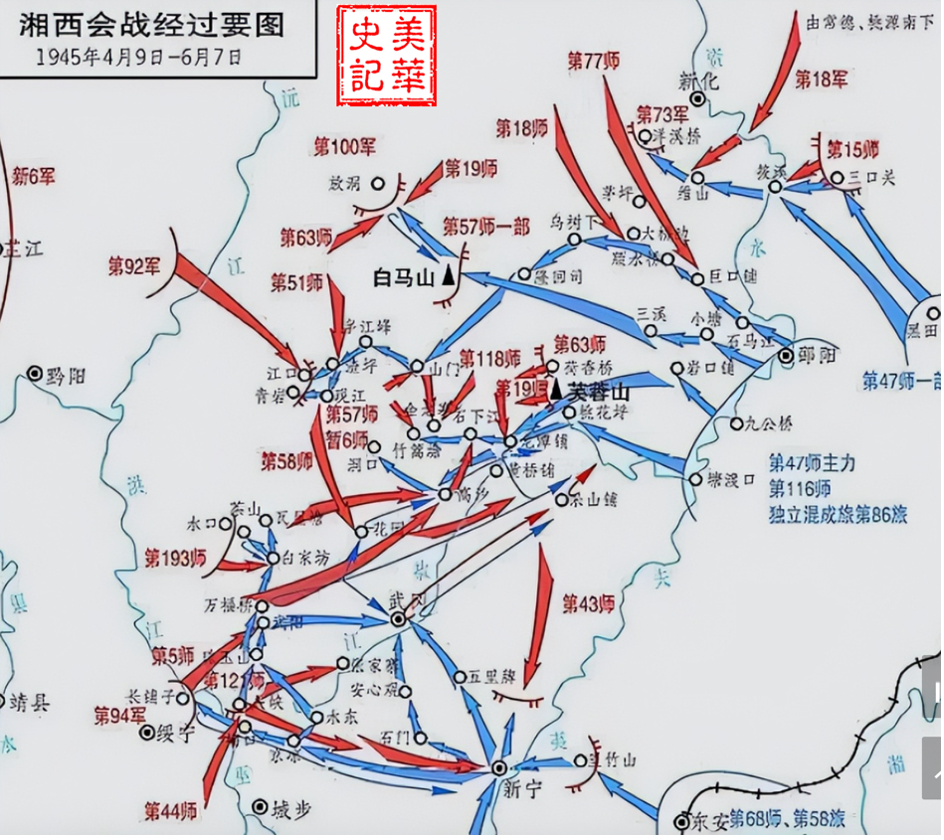
In April 1945, Japan’s 20th Army launched its assault. Under General Sakashita Ichirō, over 100,000 troops from five divisions moved into western Hunan in a three-pronged offensive targeting Zhijiang.
This was the last great battle of China’s War of Resistance.
The Battle of Western Hunan — or the Xiangxi Campaign — marked a dramatic shift. For the first time, Chinese forces turned from defense to attack.
At the heart of it all was Zhijiang (芷江)Airfield — the second largest in the Far East — and a symbol of Allied air power and hope.
9.1 Comparison of the Quality and Equipment of Japanese and Nationalist Troops After Spring 1945
Before the Japanese launched their offensive, turmoil had already erupted within the command of the China Expeditionary Army.
Inside the Japanese headquarters, staff officers engaged in fierce debates. Most opposed launching an attack. By 1945, the quality of Japanese troops, their weapons, and especially their air and armored support had all declined sharply. A major offensive would likely come at a heavy cost.
Of the 100,000 troops under Japan’s 20th Army, a staggering 60,000 were new units sent to China after 1943. Many were raw conscripts— “student soldiers” and “civilian troops” drafted in 1944 straight from Japan.
These green recruits had nowhere near the fighting spirit or tactical discipline of Japan’s pre-1940 troops. Some had even failed basic military training yet were sent directly into battle. They lacked combat readiness entirely.
On the equipment front, not much had changed since 1937. Japanese infantry still relied on the same outdated trio: the Arisaka Type 38 rifle, the Type 92 “woodpecker” machine gun, and grenade launchers. Automatic weapons like semi-automatic rifles and submachine guns were still rare. The only real upgrade: a few more mortars in frontline units.
Historically, Japan relied heavily on airpower and tanks for their offensives. But by 1945, the Japanese Air Force in China had been drastically reduced in both number and effectiveness. American “Flying Tigers” dominated the skies, stripping Japan of air superiority.
Meanwhile, China’s forces hadn’t completely transformed, but they had improved significantly. After the Burma Road was reopened in late 1944, a steady stream of American weapons and supplies flowed into China.
Take the elite 74th Army under General Wang Yaowu (王耀武). Each of its three divisions was equipped with roughly 2,000 M1 carbines, over 60 bazookas, and more than 1,500 submachine guns.
Artillery was also better distributed. Each division had a mountain artillery regiment with 12 mountain guns, and every regiment had mortar units with 8 tubes.
On the front lines, even a single infantry platoon of 40 men could now field a “firepower squad” equipped with two 60mm mortars—outmatching Japanese grenade launchers by a wide margin. Unthinkable just a few years earlier.
Most importantly, over 500 American aircraft were now stationed at Zhijiang Airfield. With air superiority on China’s side, the coming battle would be fought under far more favorable conditions.
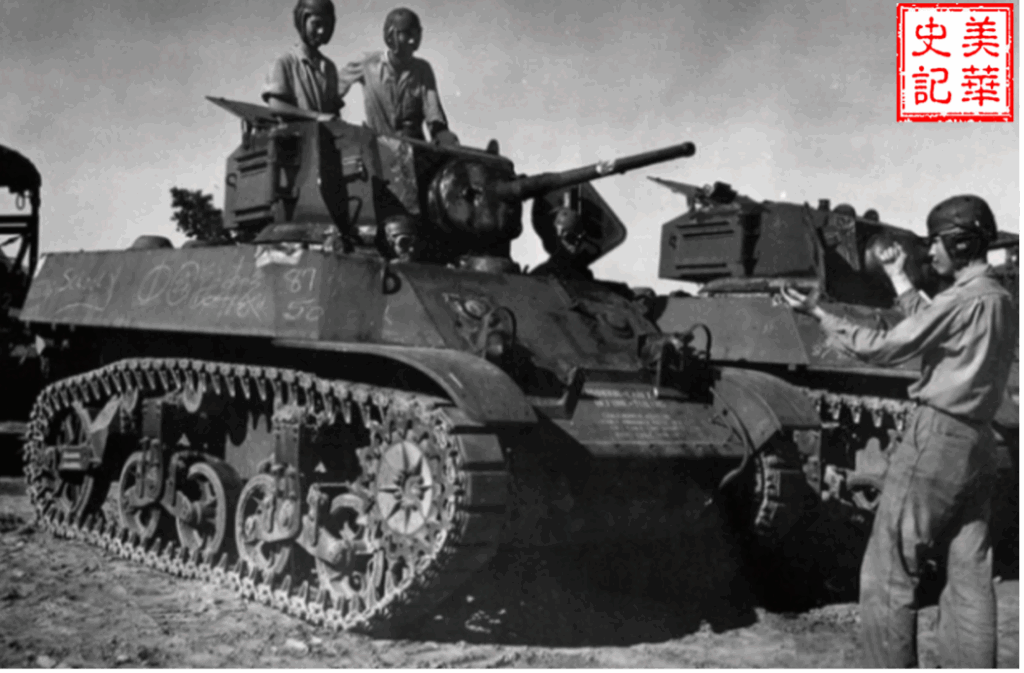
China’s Nationalist forces took up the main defense in the Battle of Western Hunan, with General Wang Yaowu’s 4th War Area leading the frontline effort. Supporting forces included General Tang Enbo 3rd War Area, General Wang Jingjiu’s 10th Group Army, and General Liao Yaoxiang’s elite New 6th Army. Altogether, more than 200,000 troops and over 400 aircraft were committed to the campaign.
At the start of the battle, Chinese commanders adopted a flexible strategy — combining defense with active counterattacks. Their goal was clear: to destroy Japanese forces on the eastern slopes of the Xuefeng Mountains (雪峰山), trap them in the rugged interior, and prepare for a decisive engagement.
The turning point came at the Battle of Qingyan.
Starting on May 1st, fierce combat broke out around Jiangkou and Qingyan near Dongkou County (江口、青岩). For seven straight days and nights, the fighting was relentless — gunfire echoed through the valleys, artillery thunder shook the earth, and the air was thick with smoke and cordite.
In just a few days, over 1,600 Japanese soldiers were killed.
Civilians from nearby villages rushed to support the army — hauling ammunition, moving supplies, and doing whatever they could to help defend their homeland.
On May 8th, with strong air support, Chinese forces launched a powerful counterattack. The Japanese lines collapsed, and their troops fled in disarray.
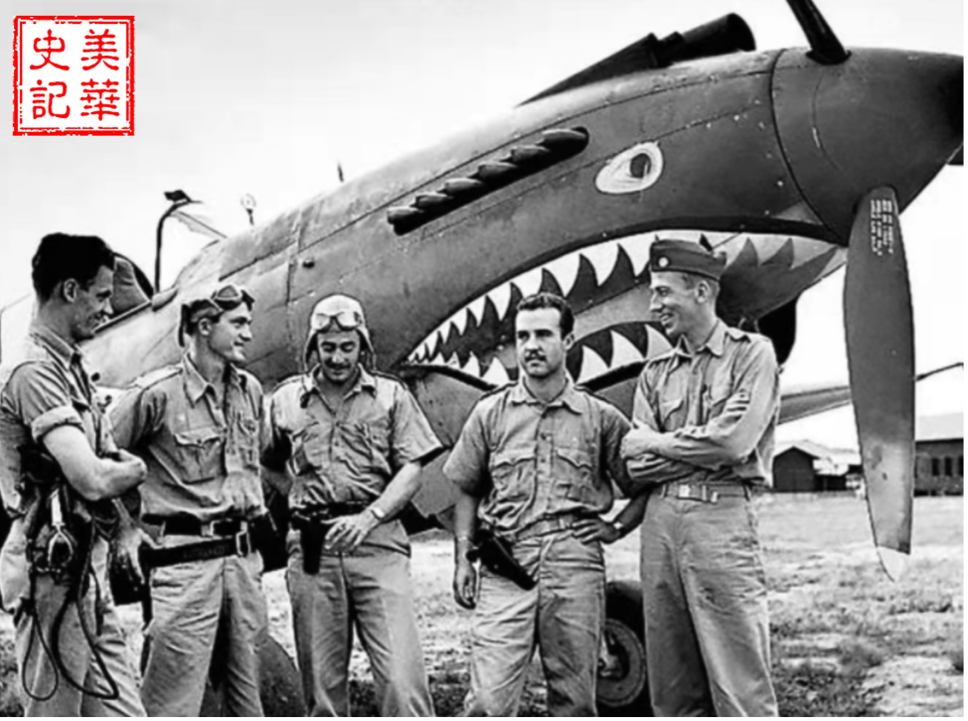
Following this battle, Chinese forces launched a full-scale counteroffensive.
Fighter planes from the Flying Tigers roared into the skies from Zhijiang Airfield, carrying out wave after wave of bombing raids on Japanese positions.
On the ground, Chinese troops pressed the advantage — pursuing the retreating enemy with relentless force.
By June 7, all lost territory had been reclaimed. The Japanese offensive was decisively repelled. The tide had turned.
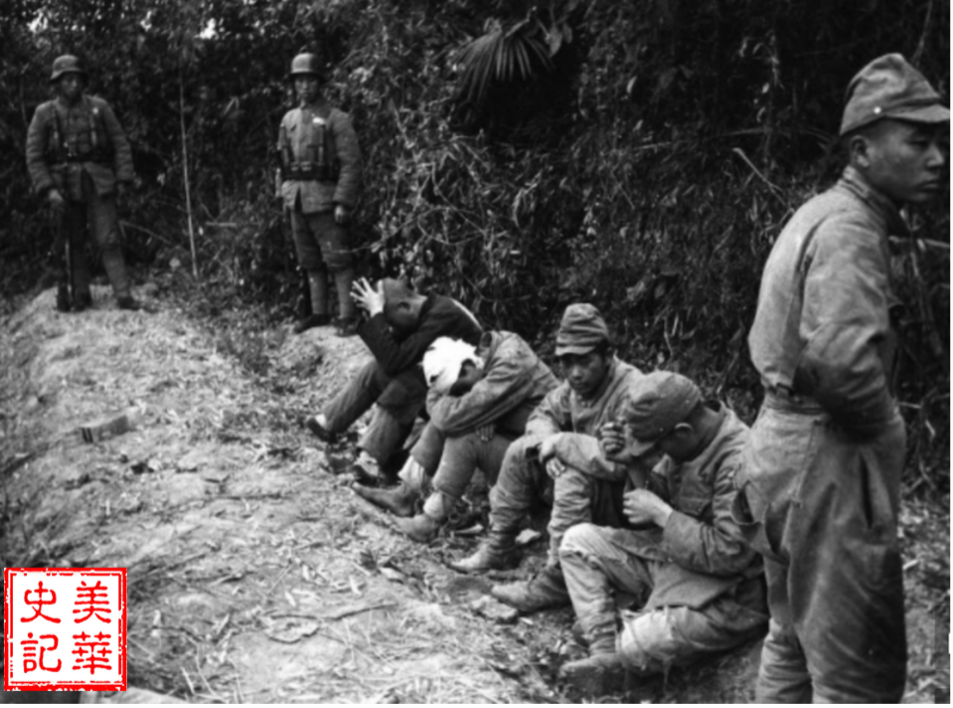
9.2 The Battle Results
The Japanese suffered catastrophic losses in the Battle of Western Hunan — 27,000 casualties, including 12,498 confirmed dead.
Roughly 1,000 soldiers, surrounded with no hope of escape, took their own lives.
One entire Japanese brigade and four regiments were wiped out, and a full division was severely crippled.
Chinese forces captured a significant haul of enemy equipment:
43 mortars, 13 howitzers, 5 mountain guns, 48 heavy machine guns, 240 light machine guns, 260 grenade launchers, and an uncountable number of rifles. They also seized 1,650 Japanese military horses.
On the Chinese side, casualties totaled 20,660, including 7,817 killed in action, among them 823 officers — about two-thirds of the Japanese losses.
China’s army also captured over 90 Japanese battle flags, and took 447 prisoners, including 42 officers.
9.3 Zhijiang Surrender
The Zhijiang Surrender refers to the formal ceremony held on August 21, 1945, in Zhijiang, Hunan Province, where Japanese forces in China officially surrendered to Chinese troops.
Due to the strategic importance of Zhijiang Airfield — the hub of the recent Xiangxi Campaign — Chinese authorities chose it as the site for Japan’s first formal surrender ceremony on Chinese soil.
The Japanese delegation was led by Lieutenant General Takeo Imai, Vice Chief of Staff of the China Expeditionary Army. The Chinese side was represented by Lieutenant General Xiao Yisu (萧毅肃), Chief of Staff of the Chinese Army Headquarters.
At a location near Zhijiang Airfield, both parties held detailed surrender negotiations, establishing the terms for Japan’s military capitulation in China.
Although the official surrender signing later took place in Nanjing, the Zhijiang ceremony served as the military foundation for Japan’s broader surrender in China.
The surrender at Zhijiang marked the end of Japan’s war of aggression in China, and the victory of the Chinese people after eight long years of resistance.
It became a deeply symbolic moment, reinforcing national pride and unity.
Following this event, China proceeded to oversee 16 regional surrender zones and 101 disarmament points, ensuring the complete surrender of all Japanese forces on Chinese territory.
It was the final chapter of a long and bitter struggle — and a defining moment in modern Chinese history.
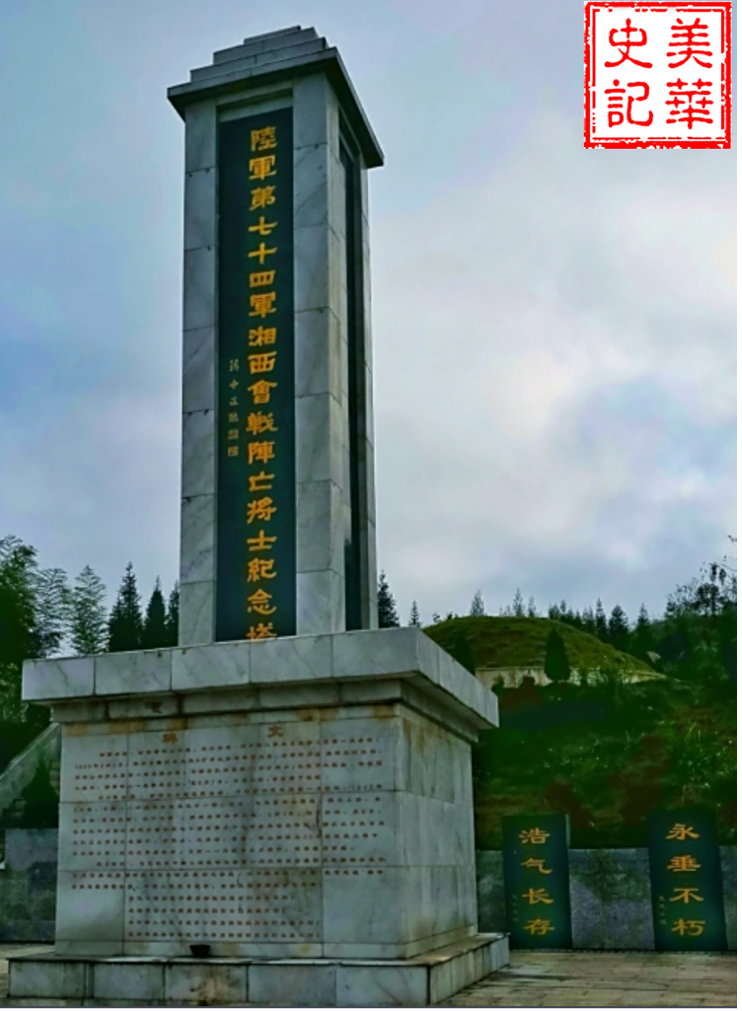
9. The Forgotten Story: A Chinese Naval Officer at D-Day
A little-known chapter of World War II history was nearly lost to time — discarded like trash.
In 2015, a photographer exploring an old apartment building in Hong Kong — slated for demolition — stumbled upon a collection of objects from pre-Communist China, the Republic of China era. Among them: an 80-page diary dated 1944.
He posted photos of the discovery online. Within days, amateur historians took notice.
What they had found was extraordinary.
This diary is now believed to be the only known firsthand account of a Chinese naval officer’s participation in the D-Day landings at Normandy.
Its author: Lam Ping-yu (林炳裕) — an idealistic, patriotic young officer. Born in 1911 to a wealthy Chinese family in Indonesia, Lam left a life of comfort to serve in China’s navy.
After the attack on Pearl Harbor in 1941 and the U.S. entry into the war, Lam was selected as one of 24 Chinese naval officers sent to Britain for training. At the Royal Naval College, they studied English, naval technology, and British maritime traditions.
Then came June 1944 — the Normandy landings.
Lam was stationed aboard the HMS Ramillies, a 30,000-ton British battleship tasked with shelling German coastal defenses to support the Allied invasion. From off the French coast, Lam and his fellow Chinese officers watched history unfold — and faced danger themselves.
In his diary, Lam describes a narrow escape:
Their ship shifted position just in time to avoid three incoming German torpedoes. He wrote, “It was extremely fortunate.” The torpedoes instead struck a nearby Norwegian destroyer.
Following Germany’s surrender in May 1945, Lam and the other Chinese officers were reassigned to the Pacific Theater.
But by the time they arrived, Japan had already surrendered.
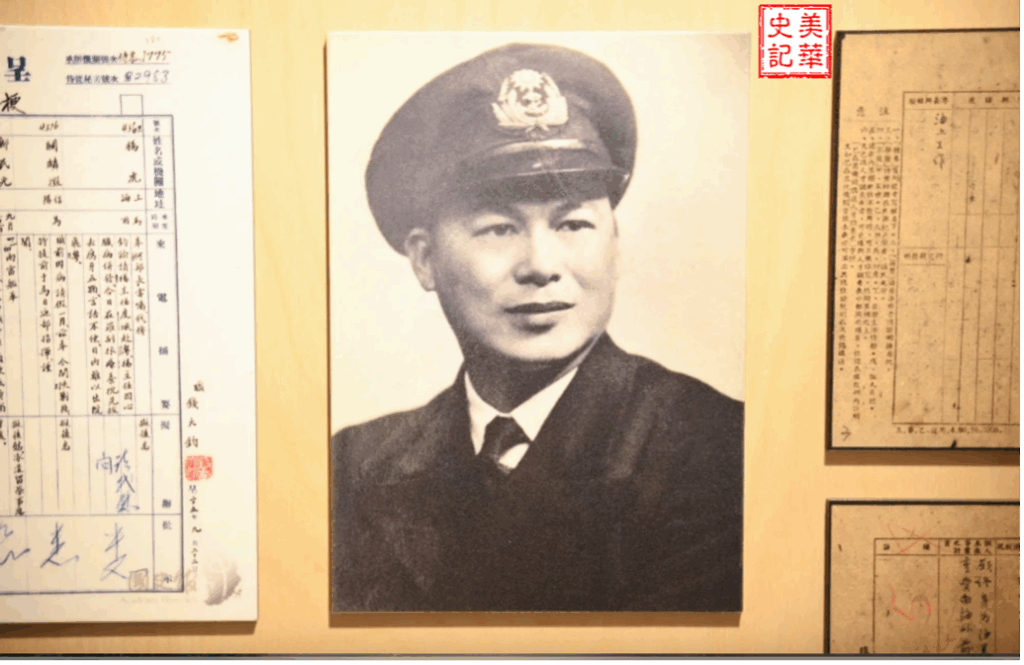
9. Conclusion
This story has traced several unforgettable battles from China’s War of Resistance against Japan.
In World War II, China paid an immense price.
Between 10 to 17 million civilians lost their lives, and 3 to 3.75 million soldiers were killed in over 20 major campaigns.
With total casualties second only to the Soviet Union, China stood among the hardest-hit nations of the war.
Across all theaters — on the home front, in the China-Burma-India theater, and even aboard the British battleship HMS Ramillies during the Normandy landings — Chinese soldiers fought with unyielding courage, shedding blood to resist fascist aggression.
Their sacrifices made a vital and indelible contribution to the Allied victory in the global war against fascism.
At the same time, overseas Chinese in America united like never before, rallying in support of the homeland’s resistance.
Prominent figures such as author Pearl S. Buck and Madame Chiang Kai-shek campaigned tirelessly in the United States, raising public awareness and building sympathy for China’s cause.
These combined efforts helped lead to a historic turning point:
In 1943, the United States repealed the Chinese Exclusion Act of 1882 — ending over six decades of institutional discrimination and marking a profound shift in the status of Chinese Americans.
Together, on the battlefield and beyond, the Chinese people — at home and abroad — stood firm, leaving a legacy of resilience, sacrifice, and unity in the global struggle for freedom.
References:
- 高关中,网报,04:09,2017/12/27, a c accessed on 7/4/2025, https://www.chinatimes.com/newspapers/20171227000184-260306?chdtv, p. 7. ISBN 9780738518725.
- 太公望,早稻田大学,文学博士,台儿庄大捷的再评价,accessed on 7/4/2025, https://zhuanlan.zhihu.com/p/617061424
- Michael Heiberg, Controlling Changsha Controlling China4/5/2017, Historynet, accessed on 7/4/2025, https://www.historynet.com/controlling-changsha-controlling-china/?f
- 潘泽庆,百团大战,2007年06月04日08:43,accessed on 7/4/2025, https://web.archive.org/web/20141129030659/http://cpc.people.com.cn/GB/64162/64172/64915/5815640.html
- U.S. Army in WW2, The China-Burma-India Theater, Plans and Preparations for the North Burma Campaign: October-December 1943, accessed on 7/4/2025, https://www.ibiblio.org/hyperwar/USA/USA-CBI-Command/USA-CBI-Command-1.html
- Operation Ichi-Go, Memim.com, 2015, accessed on 7/4/2025, https://web.archive.org/web/20151117022958/http://memim.com/operation-ichi-go.html
- Historical Record of Chinese Americans | The Sixth Decade of the Chinese Exclusion Act, Xin Su, accessed on 7/4/2025, https://usdandelion.com/archives/7487
- Wikipedia, accessed on 7/4/2025, https://en.wikipedia.org/wiki/Battle_of_Changde
- 维基百科,衡阳保卫战,accessed on 7/4/2025, https://zh.wikipedia.org/zh/%E8%A1%A1%E9%98%B3%E4%BF%9D%E5%8D%AB%E6%88%98
- 自由百科全书,滇西緬北会战,accessed on 7/4/2025, https://zh.wikipedia.org/wiki/%E6%BB%87%E8%A5%BF%E7%BC%85%E5%8C%97%E6%88%98%E5%BD%B9
- 知乎直答,如何评价抗日战争的湘西会战?accessed on 7/4/2025, https://www.zhihu.com/question/643194513/answer/3558886918
- Hugo Novales, FCC In-House Journalist, Lost and Found in Hong Kong: The Unsung Chinese Heroes at D-Day, 10/10.2024 16:45, accessed on 7/4/2025, https://www.fcchk.org/the-unsung-chinese-heroes-at-d-day/
